Alberta workshop focuses on raising chickens outside
Published 3:07 pm Friday, June 12, 2026
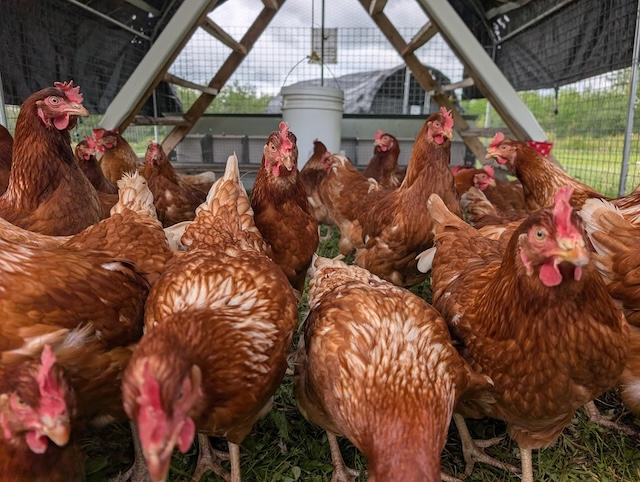
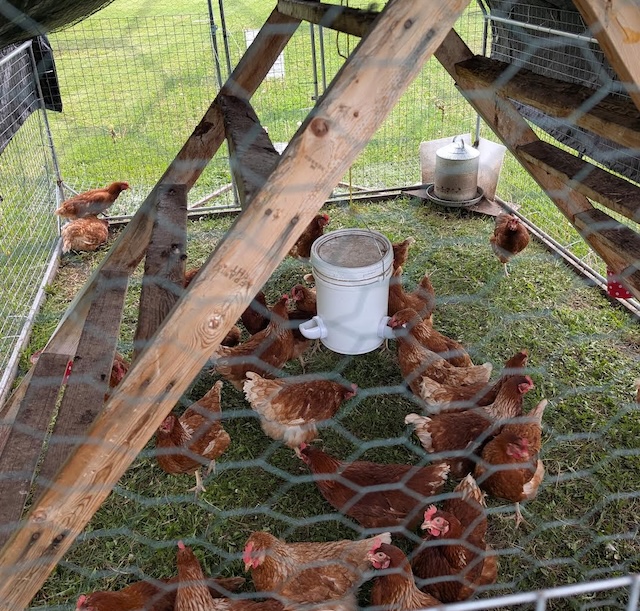
Last month, a group gathered at Lamberry Ranch to take part in a workshop on raising chickens outside as part of a larger agriculture extension program through Strathcona County.
“We try to host about a workshop a month on different agricultural topics,” said Dave Mac Taggart, senior advisor of agriculture initiatives at Strathcona County.
The focus for this one was on raising chickens outside, particularly in chicken tractors, which are mobile coops.
“Sometimes, if folks are interested in regenerative agriculture and things like that, chicken tractors are brought up sometimes in the fact of having animals come through. They’re able to fertilize the grass, picking up insects and things like that.”
He added that you can then move them along the grass and let it and the pasture regrow.
The workshop, hosted at Lamberry Ranch, had owner and operator Gwen Isaac walking the group through how they use chicken tractors on their farm.
“They operate a farm where they have a Saskatoon Orchard, and then they also do direct marketing of eggs, chickens, and lamb as well that they raise on their operations.”
He added that chicken tractors are something used or more suited to smaller-scale poultry producers and hobby farmers.
They also had speaker Samuel James of Prairie Livestock Veterinarians out to present on disease management and nutrition for chickens living outside.
“As a veterinarian, he touched on biosecurity and the key aspects there of what are some practices to be able to reduce the risk of new diseases coming into your poultry flock.”
Some of the things he discussed were proper exclusion of wild birds as well as reducing that crossover contact there.
“With the amount of migratory birds we have in Western Canada, they can be carriers of disease,” he said, adding that he also talked of reducing cross-contamination with other flocks.
“So, if you’re bringing in new birds, what that looks like as far as the quarantine period and then also of your own clothing too. We see that a lot on large-scale poultry operations of changing before you go into the barn, but that can be applied on that with small-scale flocks as well,” said MacTaggart on reducing the chances of disease transmission.
The other part of the discussion covered common diseases in poultry and how to diagnose them. The last component was going through the basics of poultry nutrition of going through your main categories, energy sources, protein, baths and vitamins and minerals, and just what to pay attention to with nutrition for your poultry.
“What that really boils down to is a lot of the pre-designed layer rashes and things like that are a great way to go because they have all that nutrition in one formulation versus trying to just make your own ration there as well if it’s not something that you have experience in.”
About Carlie Sanderson

With over 10 years as a journalist, Carlie prides herself as a storyteller in various beats. She started her career with Black Press on Vancouver Island in 2015 before heading out to Central Alberta two years later where she worked as a reporter and editor, along with founding a country focussed magazine, where she wrote and took photos.
Having grown up riding horses all her life, Carlie’s passion lies in the equestrian world. Although she hasn’t ridden in a long time, she now loves to be a spectator at various rodeos across Central Alberta with her family.
She currently resides in Sylvan Lake with her husband and three young boys.
 More by Carlie