Ag communities can access workshops helping with mental health struggles
Published 3:12 pm Wednesday, July 15, 2026

|
Getting your Trinity Audio player ready...
|
The first workshop in support of The 2026 Community Fund for Mental Health is fast approaching.
Sponsored by Farm Credit Canada (FCC), The Do More Agriculture Foundation has been putting it on every year. It is now in its eighth year of operation.
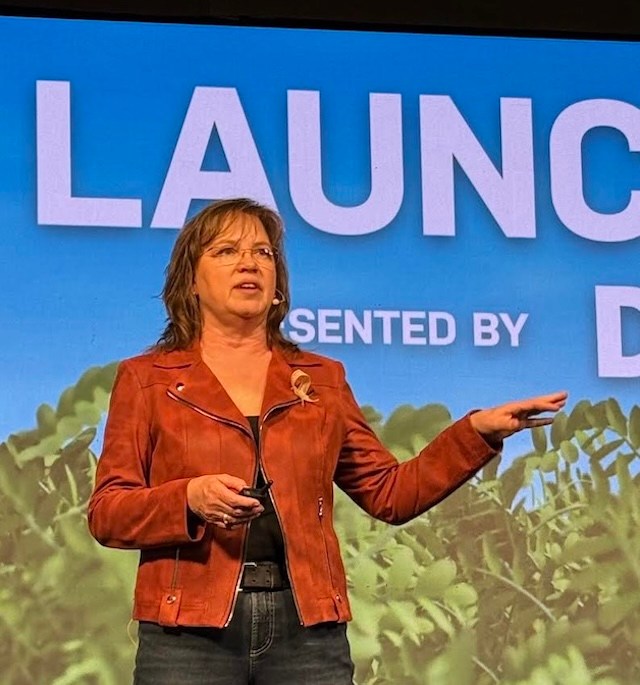
“Communities can apply to us to host a workshop in their community. The reason for that is because cultivating that culture of well-being can’t just be at the individual level, it also has to be doing the work at the community level,” said Merle Massie, executive director at The Do More Agriculture Foundation.
She added that it allows communities to host a workshop where they can get neighbours, friends and colleagues together to specifically and intentionally have a conversation, and do a bit of learning and chatting with one another around mental health.
The fund started out with a small amount of money from FCC back in 2019, and has grown every year ever since. The money now helps out with community costs, like renting a hall, getting in a little bit of food and incidental costs, along with helping to pay for the facilitator for the workshop.
“It allows them (the community) to host an event that everybody in the community feels like they can support and come and attend… and have that community level conversation about mental health, and maybe come away with a bit of learning,” said Massie.
The fund was opened in the spring, and The Do More Agriculture Foundation has received applications and have been going through them, working with just over 50 communities across Canada.
“Those are rural communities, or they could be community-based entities, such as ag farmers or an ag society that will come to us. It has to be a non-profit who holds the event, and they reach out across the communities, to community partners, including businesses, to host the event.”
The first workshop, titled Talk Ask Listen: A Lightning Presentation, will be coming up Aug. 18. Owned by The Do More Agriculture Foundation, the Talk Ask Listen presentations were revamped last year when Massie came on as the new Executive Director.
“It is not a literacy workshop. This isn’t the kind of workshop where you go and take notes for four hours. They’re specifically designed to give people increased courage and confidence to open up and develop the words to have these conversations around mental health.”
Massie said no one really talked about mental health at the time she grew up.
“What we know is that people need space to practice having these conversations about mental health and to learn how to do that in a way that’s supportive of themselves and particularly of others around them,” she said.
She added that there is a huge appetite out there for people to learn and practice the conversation itself, which is what the Talk Ask Listen workshop is all about.
One of the other things they did this past year since communities requested it, is they now have a longer workshop of about three to four hours depending on how much people talk, but what some communities have asked for is ones in a shorter period of time.
“The shorter Talk Ask Listen is our lightning version, so it pulls the highlights from that longer workshop and folds it into one hour, just so that people get a sense of how to think about these things a little bit differently, and increase your courage and confidence for these conversations.”
When it comes to those in the agriculture world reaching out for these supports, Massie said people are definitely reaching out, but there are a couple of different pieces to consider.
“There’s always a lot of pressure in agriculture. There’s so much that’s outside of our control, and this year the thing that’s causing a lot of extra pressure is that we’re extra wet, and a lot of farms are underwater, and that is absolutely huge levels of pressure,” said Massie.
“Sometimes people say, ‘Oh, look, there’s this corresponding rise in the number of people accessing help.’ Underneath all of that, we’ve seen more and more people become more aware of the resources that exist such as call lines, Counselling Alberta that has a whole special group of people that are able to provide specific counselling for farmers and ranchers.”
She added that we are finally starting to tip the scales and drop the stigma so that people will reach out and get help, and get help earlier, not necessarily waiting for a crisis.
Although The Do More Agriculture Foundation doesn’t do one on one counselling, they equip people with courage and confidence to talk to one another, reaching out for those extra levels of support should they need it.
“We believe very strongly that opening this conversation is our role, and helping other people to open the conversation and increase their courage and confidence.”
About Carlie Sanderson

With over 10 years as a journalist, Carlie prides herself as a storyteller in various beats. She started her career with Black Press on Vancouver Island in 2015 before heading out to Central Alberta two years later where she worked as a reporter and editor, along with founding a country focussed magazine, where she wrote and took photos.
Having grown up riding horses all her life, Carlie’s passion lies in the equestrian world. Although she hasn’t ridden in a long time, she now loves to be a spectator at various rodeos across Central Alberta with her family.
She currently resides in Sylvan Lake with her husband and three young boys.
 More by Carlie